Free, itemized quotes for forestry mulching, brush removal, lot clearing, and grading — connected with a local Tempe operator.
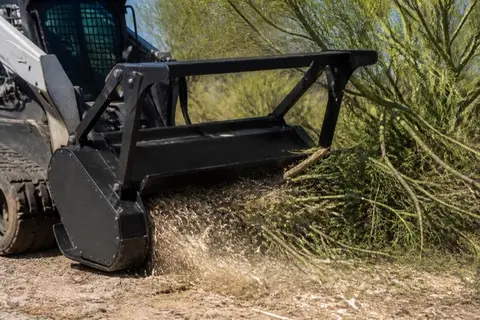
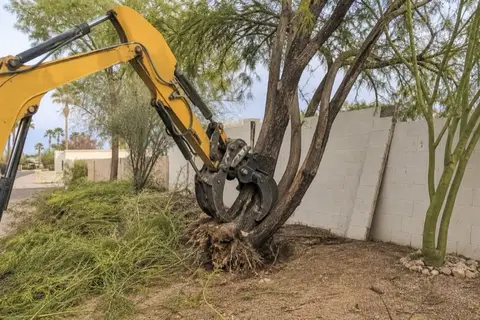
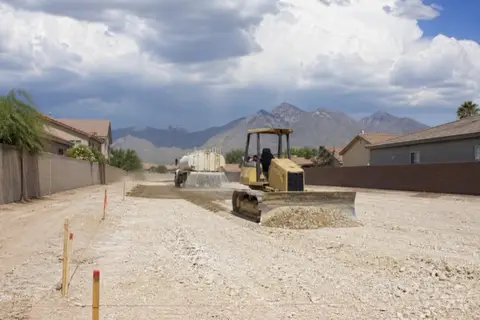
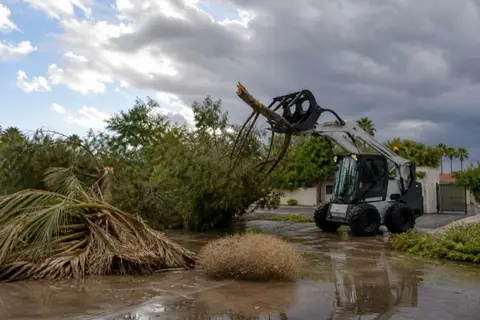
Hayden Ferry Land Clearing pairs Tempe property owners with a local land clearing contractor who works the East Valley the way it demands: drum and disc mulcher heads for volunteer mesquite and desert broom, grapple-equipped compact excavators for grubbing root crowns out of caliche-crusted soil, and water on the cut whenever a job crosses Maricopa County's 0.1-acre dust-control threshold. Protected natives are handled by the book — saguaros stay standing, always, and where ironwood, palo verde, or mesquite must come out on undeveloped ground, the Arizona Department of Agriculture gets its notice before a machine touches the lot.
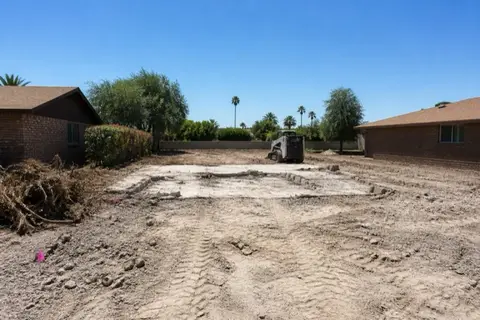
Tempe is built out, which makes its clearing work particular: deep mid-century lots going to infill, alley fence lines swallowed by oleander, long-vacant parcels colonized by tumbleweed and volunteer mesquite. The right machine for that ground is usually a compact one — and the right plan starts with what stays, not what goes.
Describe the parcel — a local land clearing contractor answers with real, itemized numbers.
It hangs on density and destination. Mowing light desert broom off a residential lot is a different job from grubbing a mesquite thicket out by the roots and hauling the spoil, so metro operators commonly quote a few hundred dollars for small brush cuts, low thousands for mulching a dense acre, and more where tree removal, grubbing, or haul-off enters the scope. Every request placed through this site comes back as a free itemized quote: mobilization, machine time, and disposal each priced in writing before anything is committed.
Two rules come up constantly. Maricopa County's Rule 310 requires a dust-control permit for any operation that disturbs one-tenth of an acre or more — about 4,356 square feet, which most lot-clearing jobs exceed. And Arizona's native plant law requires notice to the Department of Agriculture before protected species like mesquite, palo verde, or ironwood are destroyed on land being cleared. The contractor walks both requirements during the estimate so nothing stalls once the machine is on site.
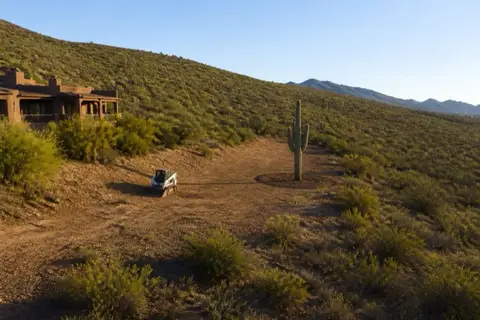
It stays. Saguaros are protected under Arizona's native plant law, and no clearing arranged through this site removes one — the machine path is planned around the cactus with a clearance radius, the same way survey stakes and utility lines get respected. If a project genuinely cannot proceed without addressing a saguaro, that is a matter for the Arizona Department of Agriculture and a permitted specialist, not a brush cutter.
Mulching wins on most Tempe lots: the head shreds standing brush into a chip layer that goes back onto the ground, holding down dust and blocking the next flush of tumbleweed without a single truckload leaving the site. Haul-off makes sense when the ground must finish grade-ready — building pads, pool digs, driveway corridors — or when the vegetation coming out is invasive material nobody wants re-seeded. Plenty of jobs split the difference: mulch the buffer, grub and haul the footprint.
October through May is the comfortable window — machines run all day and the ground stays workable. Summer clearing still happens constantly; crews start at first light and shut down before the worst heat, and the National Weather Service's monsoon season, June 15 through September 30, adds afternoon wind and dust that can pause a cut. The one argument for clearing before summer: dried-out brush on a vacant lot is exactly what carries fire through a neighborhood.
A local contractor, not this website. Hayden Ferry Land Clearing is an independent local marketing site: it routes your call or quote request to a land clearing operator covering Tempe and the East Valley, and that contractor walks the parcel, writes the estimate, pulls what needs pulling, and does the work. The quote is free and carries no obligation.
 Hayden Ferry